

5.0 · 276 Google reviews
How Old is Too Old? When Your AC Is No Longer Worth Fixing
Family-owned
24/7 Emergency Repairs
Licensed · CAC1821751
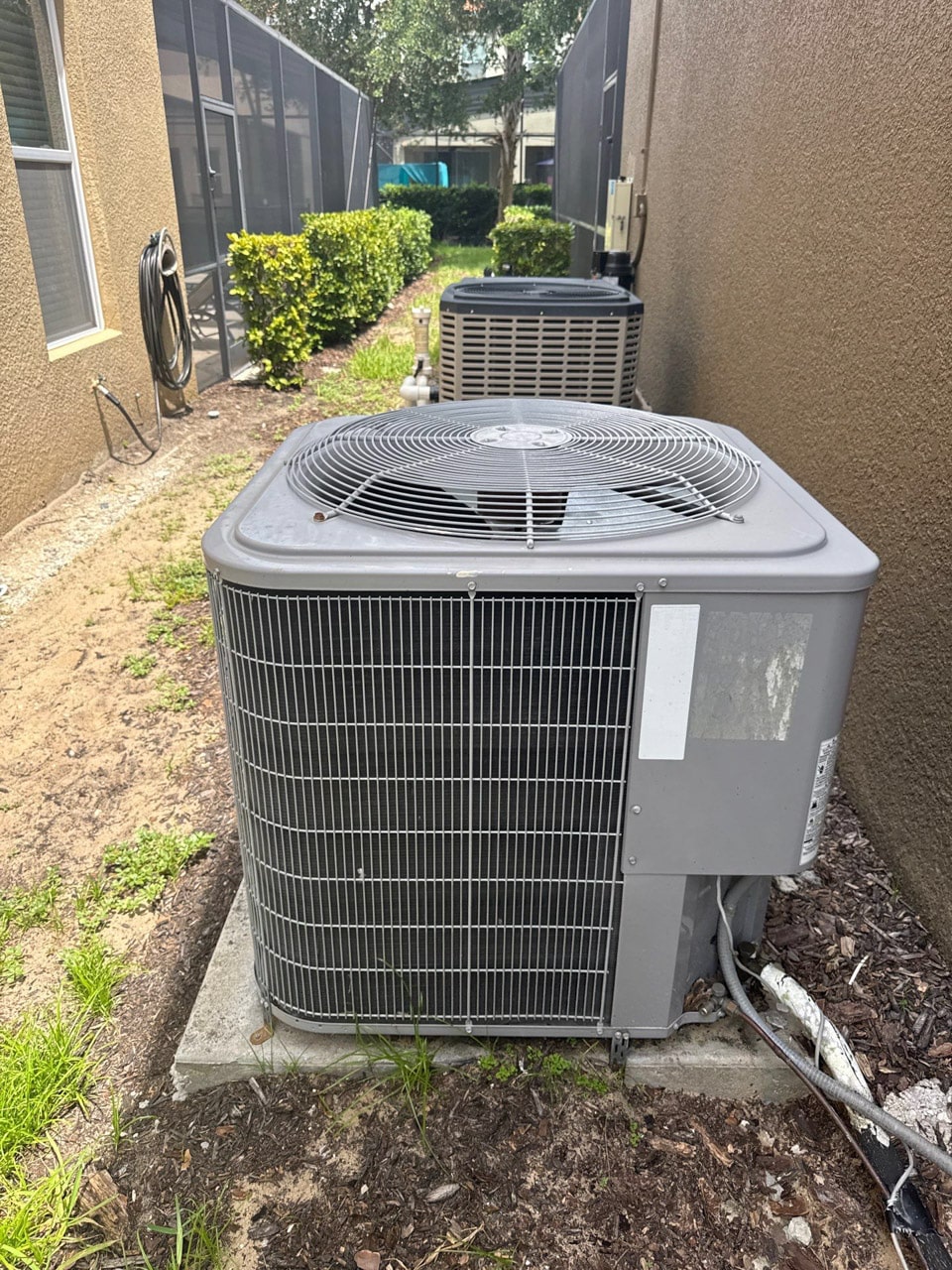
Your air conditioner is still running. Sort of.
It groans to life each morning, struggles through those brutal Florida afternoons, and somehow manages to cool your house—most of the time. Your electric bills keep climbing, but at least you’re avoiding that big replacement expense, right?
Not quite.
Here’s what’s really happening: that old AC you’ve been babying along is probably costing you more than a new system would. Every month, it’s quietly draining your bank account through sky-high energy bills and frequent repair calls.
At some point, every air conditioner crosses a line—the moment when throwing more money at repairs stops making sense and replacement becomes the smarter financial choice.
Most homeowners miss this turning point. They get so focused on avoiding the sticker shock of replacement that they don’t notice their old system has become a money pit. One more repair turns into two, then three, then suddenly you’re calling your AC guy so often he’s practically family.
Here’s the thing: when your AC gets old enough, it’s not just unreliable—it’s expensive. Really expensive. Your fifteen-year-old system isn’t just showing its age through breakdowns. It’s showing up in your utility bills, your comfort level, and how often you need service calls.
The question isn’t whether your old AC still works. The question is whether it still makes financial sense.
And in Central Florida, our brutal heat and humidity age AC systems faster than almost anywhere else in the country. Your system works year-round, faces punishing conditions, and wears out quicker than those national lifespan estimates suggest.
When should you replace an old air conditioner? It’s not just about age—it’s about math. Let’s figure out when your AC has crossed from “worth fixing” to “time to replace.”
When Your AC Starts Costing More Than It’s Worth
Air conditioners don’t age gracefully. They lose efficiency over time—kind of like how your car gets worse gas mileage as it gets older.
You can see when your car starts burning more gas. Similarly, your AC’s declining efficiency sneaks up on you through gradually higher electric bills.
The Reality of Aging Systems
During its first few years, your AC runs pretty much like it’s supposed to. Any efficiency loss is so small you won’t notice it.
Around year six or seven, things start to change. The drops in efficiency are still small—maybe 5-10%—but they add up. You might notice your bills creeping up, but it’s easy to blame rate increases or hot weather.
After ten years? That’s when efficiency really starts falling off a cliff. A system that was rated at 14 SEER when new might only perform at 10 or 11 SEER after fifteen years in Central Florida’s demanding climate.
Why This Happens
It’s not one big failure—it’s a thousand small ones. Your compressor works harder as internal parts wear out. Fan motors need more electricity to move the same amount of air. Heat exchangers get less effective as they accumulate microscopic buildup that even professional cleaning can’t completely remove.
Add in tiny refrigerant leaks that develop over time, ductwork connections that loosen, and insulation that settles, and you’ve got a system that’s working twice as hard to deliver the same cooling.
The Signs You Can Actually See
How can you tell if your AC is too old to be efficient? Watch for these warning signs:
- Your system runs longer than it used to for the same cooling
- Some rooms never quite get comfortable anymore
- Your electric bills keep climbing even though your habits haven’t changed
- The humidity in your house feels higher despite the AC running
When the Math Stops Working
Here’s a reality check: if your cooling costs have increased by $75 per month over the past few years, that’s $900 annually in wasted energy. Over five years, you’re looking at $4,500 thrown away on inefficiency.
That’s often enough to finance a replacement system that would cut your energy costs immediately.
The Real Cost of Keeping an Old AC Running
Beyond the obvious repair bills, an aging AC hits your wallet in ways you might not realize.
The Energy Waste Tax
Your declining efficiency isn’t just uncomfortable—it’s expensive. If your AC used to cost $150 a month to run and now costs $225 for the same cooling, you’re paying a $75 monthly “old equipment tax.”
That’s $900 a year in wasted energy. Over five years? You’re looking at $4,500 thrown away on inefficiency—often enough to pay for a significant portion of a replacement system.
Repairs That Never End
When AC systems get old, repairs don’t just happen more often—they get more expensive, too.
What starts as an annual tune-up becomes seasonal repairs. Then multiple service calls per year. Pretty soon, you’re speed-dialing your AC guy more than your best friend.
And here’s the kicker: individual repairs cost more on old systems because problems are rarely simple anymore. That “quick fix” turns into a diagnostic adventure when multiple worn-out parts are involved.
Parts That Don’t Exist
Older systems face a cruel reality: replacement parts become harder to find and more expensive to buy. Some repairs become impossible when manufacturers stop making the parts you need.
Even when parts are available, you might wait longer for service while technicians track down obsolete components. And you’ll pay premium prices for parts that are no longer in regular production.
The Emergency Service Premium
Old systems don’t fail on schedule—they break down during heat waves, on weekends, and at the worst possible times. Emergency service calls cost double or triple regular rates.
When your system is unreliable, you’re more likely to need emergency service multiple times. Those premium rates add up fast.
The Comfort Cost
How do you put a price on sleeping through the night? Or working from home without sweating?
When your AC can’t maintain consistent temperatures, everyone in your family suffers. Poor humidity control affects indoor air quality and can contribute to health problems like allergies and respiratory issues.
Property Value Impact
Aging HVAC systems show up on home inspections and affect property values. If you’re thinking about selling, an old AC system becomes a negotiation point that could cost you thousands at closing.
Even if you’re not selling now, you’re missing out on the home value benefits that come with a modern, efficient system.
Is AC Repair or Replacement the Better Choice?
Here’s a simple rule that makes the decision easier: if you’re spending more than half the cost of replacement on repairs each year, it’s time to replace.
But don’t just look at this year’s costs. Add up what you’ve spent on repairs over the past two or three years, plus the extra energy costs from declining efficiency.
The total might shock you—and often exceeds what you’d pay monthly for a new, reliable system.
What Modern Systems Actually Deliver
The jump from an old AC to a new one isn’t just an upgrade—it’s like going from a flip phone to a smartphone.
Real Energy Savings
Modern air conditioners routinely hit SEER ratings of 16, 18, or even 20. Compare that to your old system’s SEER 10 or 11, and you’re looking at 40-60% better efficiency.
For a typical Central Florida home, that translates to $1,000-1,500 in annual energy savings. Those savings often cover a big chunk of your monthly payment for a new system.
Variable-speed technology means your new system adjusts its output to match exactly what your home needs. Instead of blasting full power then shutting off (like your old system), it runs continuously at lower speeds—using less energy while keeping you more comfortable.
Smart Features You’ll Actually Use
New systems come with smart thermostats that learn your schedule and adjust automatically. You can control your AC from anywhere using your phone, get alerts when something needs attention, and track energy usage in real-time.
Zoning capabilities let different areas of your home stay at different temperatures. No more compromising between the hot bedroom and the freezing living room.
Humidity Control That Actually Works
This is huge in Florida. New systems don’t just cool the air—they control humidity properly. You’ll feel comfortable at higher thermostat settings, which saves even more energy.
Built to Last
Modern systems use better materials and smarter designs. They’re built to handle Florida’s brutal conditions while lasting 15-20 years with proper maintenance.
Plus, you get comprehensive warranties that cover major components for years. Compare that to your old system, where every repair comes out of your pocket.
The Reliability Factor
Maybe the biggest benefit? You stop worrying about breakdowns. No more sweating through repairs during heat waves. No more emergency service calls. Your AC simply works when you need it.
Return on Investment
New HVAC systems add real value to your home. Real estate professionals consistently rank updated HVAC as one of the top factors buyers care about.
Even if you’re not selling soon, you’re protecting your property value while enjoying immediate comfort and efficiency benefits.
Making the Smart Choice
When evaluating aging AC equipment, consider total value rather than just upfront costs. Modern systems provide benefits that aging equipment cannot deliver, regardless of repair investment or maintenance quality.
The decision isn’t just about cooling your home—it’s about optimizing comfort, efficiency, reliability, and long-term value. Modern systems excel in all these areas while aging systems decline in every category.
Ready to escape the cycle of repairs and rising energy bills? Blue Air Heating and Cooling is a local HVAC company specializing in helping Central Florida property owners transition from aging, inefficient systems to modern, reliable comfort solutions. Our experienced team provides honest assessments of your current system and designs replacement solutions that maximize value and performance. Contact us at (407) 300-4185 to discover how modern AC technology can transform your comfort while reducing your costs.
Latest Posts


Request Service
Free estimates on new equipment installation
By submitting, you agree to receive text message communication from us per our “Terms and Conditions and/or Privacy Policy”, which state that we will never share your personal information or spam you
By submitting this form and signing up for texts, you consent to receive messages from Blue Air Heating and Cooling at the provided number, including messages sent via auto-dialer. Consent is not a condition of purchase. Msg & data rates may apply. Msg frequency varies. Unsubscribe at any time by replying STOP or clicking the unsubscribe link (where available). For help, reply HELP. Information will not be shared with third parties for marketing or promotional purposes. Privacy Policy & Terms & Conditions.
At Blue Air Heating and Cooling, we believe that comfort should never be compromised. Our dedicated team is committed to providing you with exceptional service, ensuring your home remains a sanctuary regardless of the season. With our extensive experience and expertise, we tackle every HVAC challenge with precision and care. Whether it's a routine maintenance check or an emergency repair, we are just a call away, ready to restore your comfort. Experience the difference with Blue Air – where your satisfaction is our priority.
