

5.0 · 276 Google reviews
Why Your Home Still Feels Hot Even When the AC is Running
Family-owned
24/7 Emergency Repairs
Licensed · CAC1821751
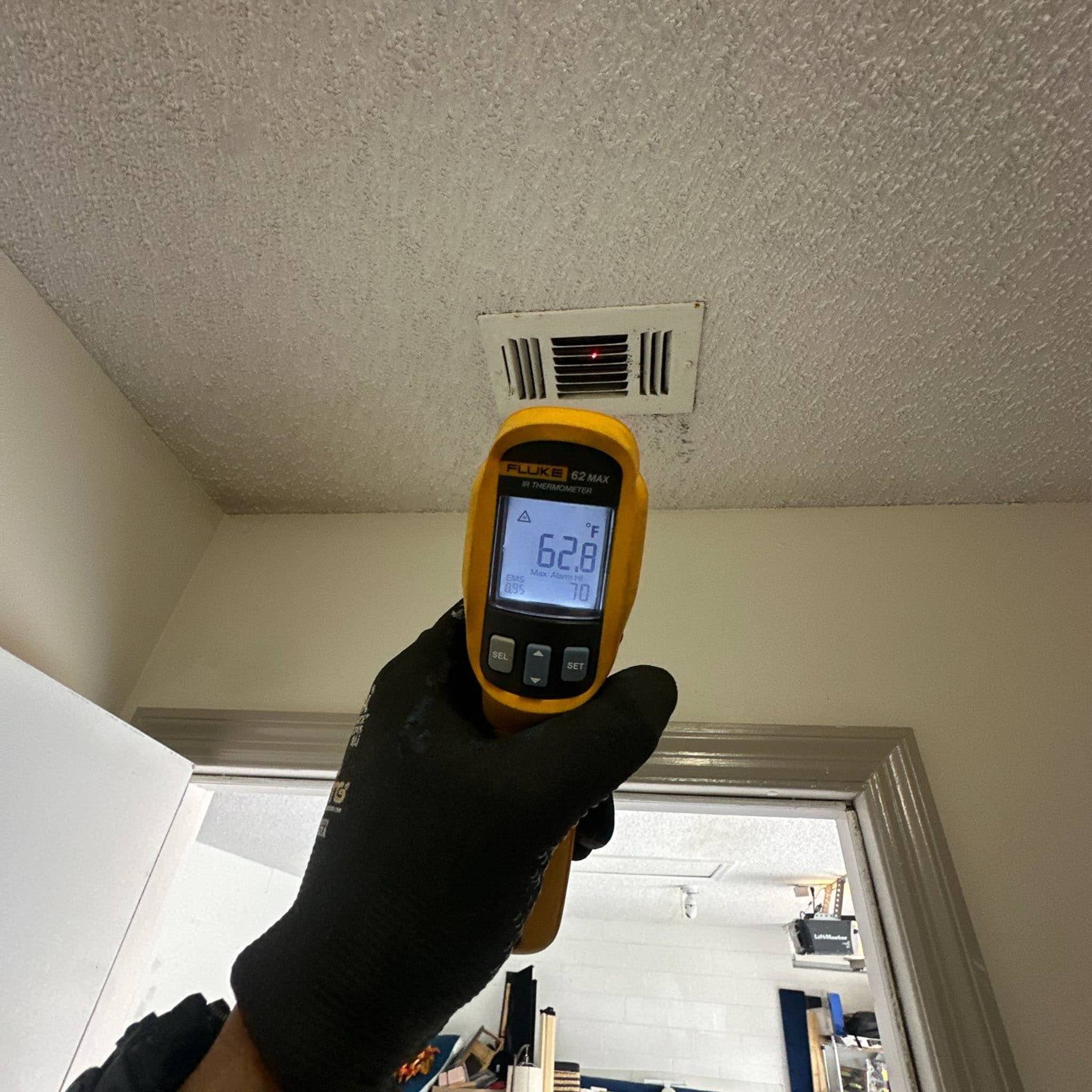
You hear it running. The outdoor unit is humming away, the thermostat shows it’s working, and you can feel some air coming from the vents. But your house still feels like you’re living inside an oven.
Welcome to one of the most frustrating problems Central Florida homeowners face—an air conditioner that runs but doesn’t actually cool.
You’re not going crazy. That uncomfortable, sticky feeling isn’t in your head. Your system is running constantly, your electric bill is through the roof, yet you’re still sweating indoors while your neighbor’s house feels like an arctic tundra.
Here’s what’s happening: your AC isn’t broken in the traditional sense. It’s running, making the right sounds, and pushing air through your vents. But something is preventing it from doing its actual job—cooling your home effectively.
Most homeowners think a running AC equals a working AC. That’s not always true. And this misconception costs thousands in wasted energy while leaving families miserable during Florida’s brutal heat.
Let’s figure out what’s really going on and get your home comfortable again.
The Most Common Culprits
When your air conditioner runs but doesn’t cool properly, you’re usually dealing with one of these issues. The good news? Many of them are easier to fix than you might think.
Your Air Filter is Choking Your System
This is the big one—and the one most homeowners overlook until it becomes a real problem.
Why is my AC not cooling my house properly? Start here: when did you last change your air filter?
A dirty filter doesn’t just reduce air quality. It strangles your entire system’s ability to move air. When airflow gets restricted, your AC has to work twice as hard to deliver half the cooling. The result? A system that runs constantly but never quite gets the job done.
Here’s how to check: pull out your filter and hold it up to the light. If you can’t see through it clearly, or if it’s visibly caked with dust and debris, that’s your problem right there.
Replace it immediately and give your system a few hours to recover. You might be surprised how much difference something that simple can make.
Blocked or Closed Vents
We see this all the time. Homeowners close vents in unused rooms, thinking it’ll save energy. Or furniture gets moved in front of vents without a second thought.
But here’s the thing: your AC system is designed to move a specific amount of air through your home. When you block that airflow, you create pressure problems that affect the entire system.
Walk through your house and make sure all vents are open and unobstructed. That includes return air vents—the large grilles that pull air back into your system. These are just as important as the vents that blow cool air into your rooms.
Refrigerant Problems
This one’s trickier because you can’t see it happening.
Your AC uses refrigerant to actually create cool air. If refrigerant levels are low (usually due to a leak), your system will run and run but struggle to produce adequate cooling.
Signs of low refrigerant include:
- Ice forming on your outdoor unit
- Air from vents feels cool but not cold
- System runs constantly, but never reaches the set temperature
Refrigerant issues require professional repair. Don’t try to handle this yourself—it requires specialized equipment and licensing to work with refrigerant safely.
Your Thermostat Isn’t Where You Think It Is
Sometimes the problem isn’t your AC at all—it’s your thermostat.
If your thermostat is located near a heat source (like a sunny window, lamp, or kitchen), in a drafty area, or in a room that heats up differently than the rest of your house, it might not be getting an accurate reading of your home’s temperature.
The thermostat thinks your house is comfortable, so it’s not calling for more cooling. Meanwhile, the rest of your house feels like a sauna.
Ductwork Issues You Can’t See
What to do if my air conditioner isn’t cooling often involves looking beyond the AC unit itself.
Your ductwork is like the circulatory system of your AC. If there are leaks, disconnections, or blockages in your ducts, cool air never makes it to your living spaces. Instead, it’s being pumped into your attic, crawl space, or between your walls.
Common ductwork problems include:
- Ducts that have come loose or disconnected
- Holes or tears in ductwork
- Crushed or collapsed ducts
- Poorly sealed connections
These problems often develop gradually, so you might not notice them right away. But over time, they can seriously impact your system’s ability to cool your home effectively.
When Simple Fixes Aren’t Enough
If you’ve checked your filter, opened your vents, and your system still isn’t cooling properly, you’re likely dealing with a more complex issue that needs professional attention.
Causes of Weak Airflow in Air Conditioning Systems
Beyond dirty filters and blocked vents, weak airflow can signal several serious problems:
Blower Motor Issues
The blower motor is responsible for moving air through your system. If it’s failing or running at reduced speed, you’ll get weak airflow even if everything else is working correctly.
Signs of blower motor problems include:
- Very little air coming from vents
- Strange noises when the system is running
- System that starts and stops frequently
Frozen Evaporator Coils
When your indoor evaporator coil freezes up, it blocks airflow and prevents heat absorption. This usually happens due to restricted airflow (dirty filter) or low refrigerant.
If you see ice on your indoor unit, turn off your system immediately and let it thaw completely before turning it back on. If it freezes again, you need professional repair.
Compressor Problems
Your compressor is the heart of your AC system. When it starts to fail, it might still run but lose its ability to compress refrigerant effectively. This means it can’t remove heat from your home efficiently.
Compressor issues often develop gradually. Your system might cool adequately on mild days but struggle when temperatures soar.
Signs of compressor problems:
- System runs constantly but house stays warm
- Unusual noises from outdoor unit
- Higher than normal electric bills
System Sizing Issues
This is a big one that many homeowners don’t consider: your AC might simply be too small for your home’s cooling needs.
This can happen if:
- Your home was expanded or modified after the AC was installed
- Your original system was undersized from the beginning
- Changes to your home (new windows, insulation, etc.) have affected your cooling requirements
An undersized system will run constantly trying to keep up with demand, but it’ll never quite get there—especially on the hottest days.
How to Improve Home Cooling with Air Conditioning
Once you’ve identified and addressed obvious problems, there are several steps you can take to improve your system’s cooling performance:
Optimize Your Home’s Airflow
- Keep furniture away from vents and returns
- Use ceiling fans to help circulate cool air
- Close blinds during the hottest part of the day to reduce heat gain
- Make sure your outdoor unit has adequate clearance (at least 3 feet on all sides)
Address Maintenance Issues
- Change filters regularly (monthly during heavy use)
- Keep outdoor unit clean and free of debris
- Schedule annual professional maintenance
- Clean return air vents and registers
Consider Upgrades
- Programmable or smart thermostats can optimize system operation
- Duct sealing can improve efficiency significantly
- Better insulation reduces the cooling load on your system
When Professional Help Is Necessary
Some cooling problems require professional diagnosis and repair. Here’s when to call in the experts:
Common Air Conditioning Repair Issues That Need Professional Attention:
- Refrigerant leaks or charging
- Electrical problems
- Compressor issues
- Ductwork repairs or modifications
- System sizing evaluations
Warning Signs You Shouldn’t Ignore:
- Ice formation on indoor or outdoor units
- Strange smells when system runs
- Electrical burning odors
- Water leaks around indoor unit
- Frequent circuit breaker trips
Is It Time for Replacement?
Sometimes, the reason your AC isn’t cooling effectively is simply that it’s time for a new system.
Consider replacement if:
- Your system is more than 12-15 years old
- Repair costs are approaching 50% of replacement cost
- You’re dealing with frequent breakdowns
- Energy bills keep climbing despite repairs
- You can’t achieve comfortable temperatures even after repairs
Modern AC systems are dramatically more efficient than older units. A new system might not only solve your cooling problems but also significantly reduce your energy bills.
The Bottom Line
An AC that runs but doesn’t cool is frustrating, but it’s usually fixable. Start with the simple stuff—check your filter, open your vents, and look for obvious problems. If those don’t solve the issue, it’s time to call in a professional.
Don’t suffer through another hot, uncomfortable day, hoping the problem will fix itself. Central Florida’s heat is too intense to gamble with your comfort.
Ready to get your AC cooling properly again – contact a 5-star heating and cooling company! Blue Air Heating and Cooling specializes in diagnosing and fixing cooling problems throughout Central Florida. Our experienced technicians can quickly identify what’s keeping your home hot and get you back to comfortable temperatures. Whether you need a simple repair or it’s time to discuss replacement options, we’re here to help. Call us at (407) 300-4185 for fast, reliable service that gets results.
Latest Posts


Request Service
Free estimates on new equipment installation
By submitting, you agree to receive text message communication from us per our “Terms and Conditions and/or Privacy Policy”, which state that we will never share your personal information or spam you
By submitting this form and signing up for texts, you consent to receive messages from Blue Air Heating and Cooling at the provided number, including messages sent via auto-dialer. Consent is not a condition of purchase. Msg & data rates may apply. Msg frequency varies. Unsubscribe at any time by replying STOP or clicking the unsubscribe link (where available). For help, reply HELP. Information will not be shared with third parties for marketing or promotional purposes. Privacy Policy & Terms & Conditions.
At Blue Air Heating and Cooling, we believe that comfort should never be compromised. Our dedicated team is committed to providing you with exceptional service, ensuring your home remains a sanctuary regardless of the season. With our extensive experience and expertise, we tackle every HVAC challenge with precision and care. Whether it's a routine maintenance check or an emergency repair, we are just a call away, ready to restore your comfort. Experience the difference with Blue Air – where your satisfaction is our priority.
